
How Much Area and Angle Will the Mirror Cover?
Area and Angle Depends On:
- Mirror Shape
- Mirror Position/Angle and Viewing Point
- Circular or Rectangular
1. Mirror Shape
DuraVision manufacture 3 basic shapes.
- Full Dome Mirrors - Deep Curve
- Half Dome Mirrors - Semi Deep Curve
- Standard Convex Mirrors - Shallow Curve
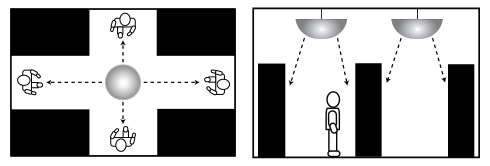
Full Dome Mirrors - have a deep curve, which gives the mirror a 360° viewing angle. When mounted to the ceiling (or suspended from high ceilings with chain or twine) the viewer can see a reflection in all directions. The shape is ideal for viewing large open areas, especially over aisles and shelving. For example, instead of having one mirror for viewing one aisle, a ceiling dome can view over multiple aisles, such as large store layouts or warehouses with multiple shelving aisles.
NOTE: Full Domes and Quarter Domes have the same deep curve (Quarter domes are full domes that have been cut into quarters)
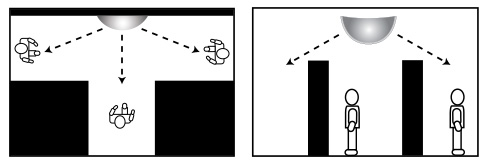
Half Dome Mirrors - are designed to give 180° reflection, so the viewer can see both left and right without the need for two separate mirrors. DuraVision™ Half Domes are scientifically engineered to give the maximum useable reflective surface for a wide angle view and a larger image size. Other brands have a deeper curve and reflect 50% of the wall they are mounted to.
Half Domes are ideal for T-Intersection corridors such as hospitals, schools and office hallways. They can also assist forklift drivers in warehouses when they need to see left and right at the end of shelving units. For store observation, they can be mounted along the back wall to monitor customers in hard to see areas.
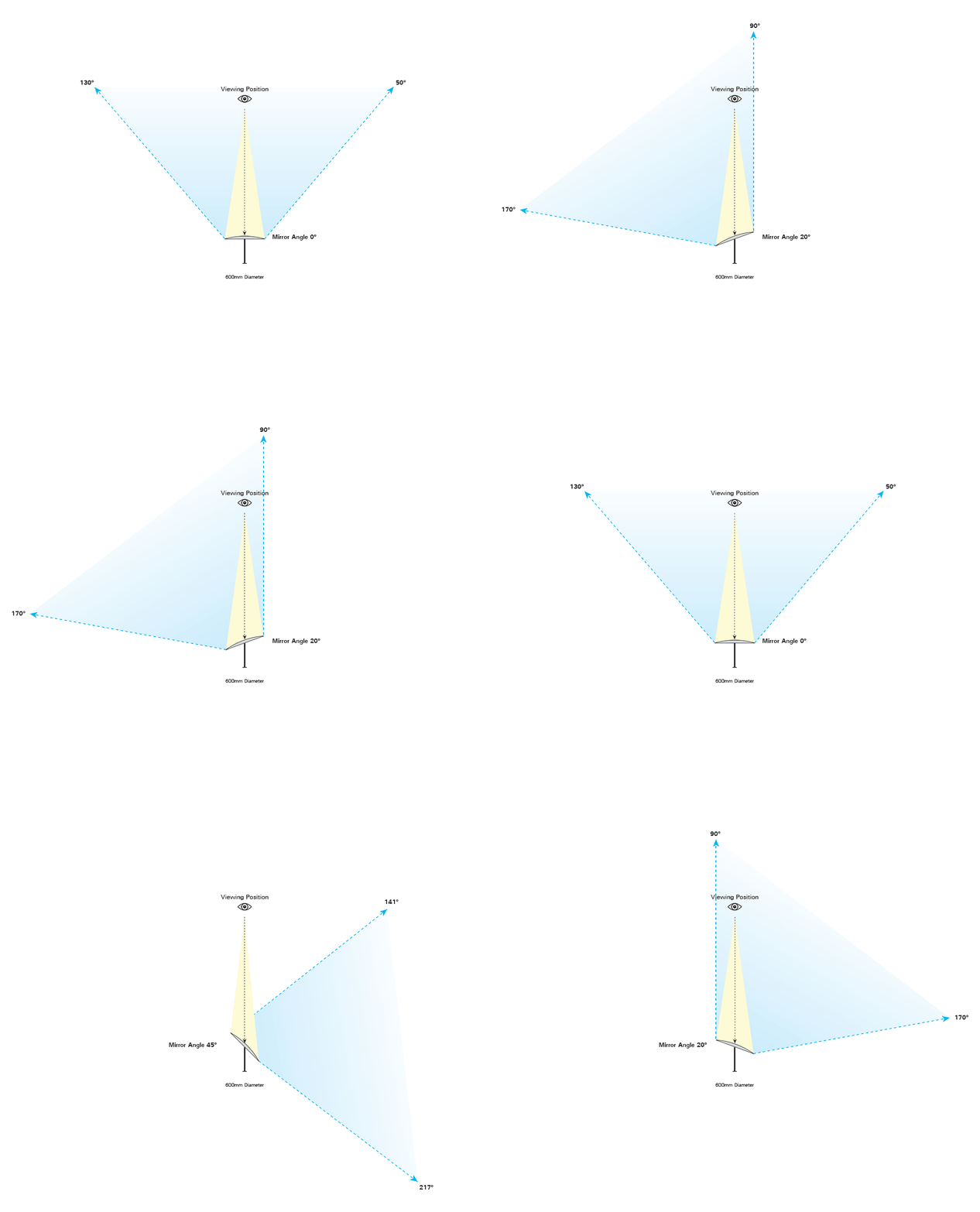
Standard Convex Mirrors - will generally give 130° of reflection, however this can change depending on how the mirror is angled, (see below). Standard mirrors come with an adjustable bracket to position the mirror into a specific area.
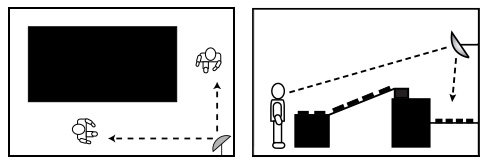
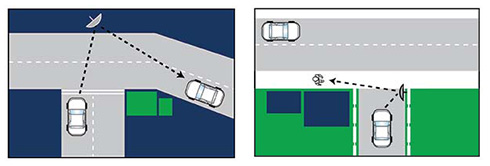
Indoor mirrors are ideal for viewing a specific blind spot in a store, office building or warehouse, around corners and partitions etc. Outdoor mirrors will help you see traffic and pedestrians around blind corners on driveways and at entry/exits on to busy streets. Also used for monitoring children outside on playgrounds with blind spots, and for security around buildings and parking areas.
Mirror Shape
Full Dome Mirrors 360°.
Half Dome Mirrors 180°.
Indoor Standard Mirrors.
Ourdoor Standard Mirrors.
2. Mirror Position and Viewing Angle
When viewing a Standard curved mirror from straight in front, the viewing angle is 130°. However if the angle of the mirror is positioned at 45°, the viewing angle can range up to 217°. This is why convex mirrors are so effective for viewing around corners and blind spots.
Viewing Angles for Adjustable Mirrors
The coverage and angle can change, depending on your viewing position.
3. Circular or Rectangular?
There is no advantage or disadvantage to choosing a round or rectangle shaped mirror. They have the same curvature.
Acrylic rectangle mirrors are cut from round convex mirrors.
Round Mirrors are thermoformed from squares. Rectangle mirrors are cut from round mirrors after they are thermoformed with a convex curve.

